
The Real Cost of a Bad Google Rating
A Google rating is often the first impression a potential customer sees. Before visiting a website, calling a business, or comparing prices, most people glance at the star rating-and make an instant judgement.
While a single negative review may seem harmless, the real cost of a low or declining Google rating is often far greater than most businesses expect.
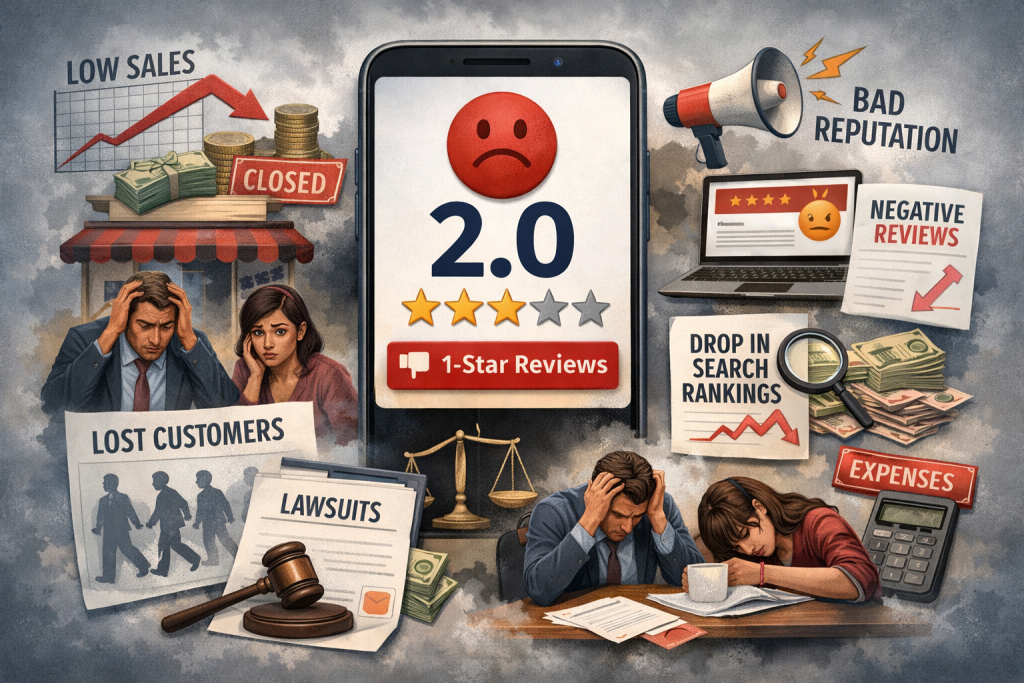
How Google Ratings Influence Customer Decisions
Google ratings directly affect trust. Studies consistently show that users are far less likely to engage with businesses rated below four stars.
Even a small drop-from 4.5 to 3.9, for example-can:
- Reduce click-through rates
- Lower inquiry volume
- Shift customers to competitors with stronger ratings
In competitive local markets, ratings act as a filtering mechanism. Businesses with weaker ratings are often skipped entirely.
Example 1: Local Service Business
Consider a local service provider averaging 4.6 stars. After receiving several questionable 1-star reviews, their rating drops to 3.8.
The impact:
- Fewer phone calls
- Lower trust during price comparisons
- Increased customer objections (“I saw some bad reviews…”)
Even if the service quality hasn’t changed, perception has-and perception drives decisions.
Example 2: Retail or Hospitality
For restaurants, hotels, and retail businesses, ratings affect foot traffic almost immediately.
A visible drop in rating can lead to:
- Fewer walk-ins
- Lower booking conversions
- Reduced repeat visits
Negative reviews don’t just deter new customers-they can also influence loyal ones.
The Hidden Costs Beyond Lost Sales
The cost of a bad Google rating isn’t limited to lost revenue.
Other impacts include:
- Reduced Google Maps visibility
- Lower local search rankings
- Increased marketing spend to offset trust loss
- Time spent managing reputation instead of growing the business
Over time, these indirect costs often exceed the value of the lost transactions themselves.
Why Some Bad Ratings Are Hard to Fix
Not all negative reviews violate Google’s policies. Some remain online because:
- They reflect subjective opinions
- They lack clear policy violations
- They haven’t been evaluated correctly
This makes understanding eligibility-and responding strategically-critical.
Understanding the financial impact of poor ratings is only part of the picture. Many businesses also struggle with why certain reviews stay live in the first place. If you’re trying to make sense of delays or inconsistent enforcement, see our guide on why Google doesn’t remove every fake review immediately, which explains how Google evaluates reviews and what affects removal timelines.
Concerned About How Your Google Rating Is Affecting Your Business?
Some damaging reviews can be addressed, but only when they violate Google’s policies and are handled correctly. We offer a free review audit to determine whether a review violates Google policy and whether removal is realistically achievable.
Find out which review can be removed – free. No access required, no obligation.
Weekly tips on Google reviews, removals, and rankings.